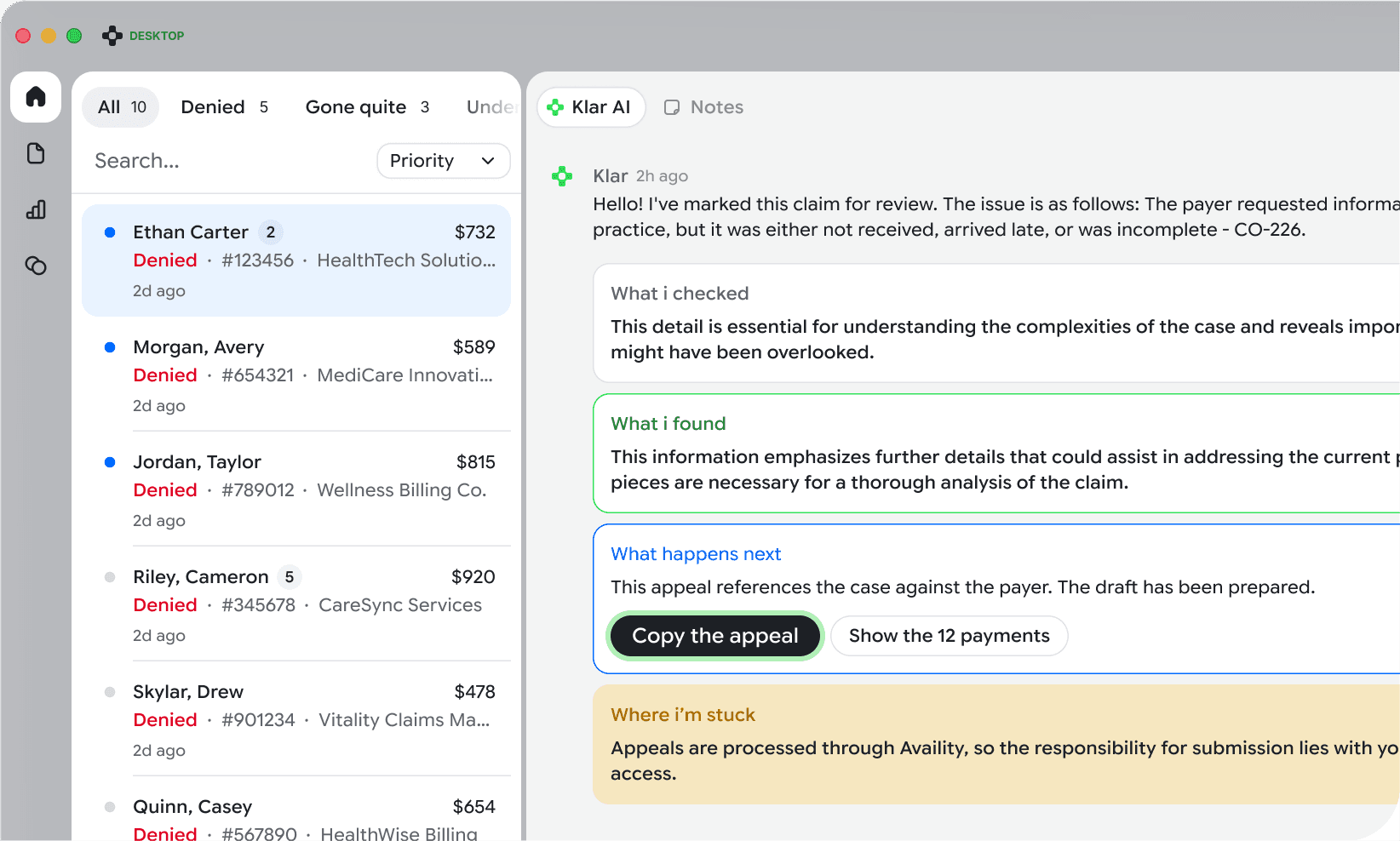
AR recovery, worked by what it's worth
AR recovery in medical billing means collecting on claims a payer has already been billed for but has not paid — aged, denied or short-paid receivables sitting on a practice's own books. It is not consumer debt collection. Klar works that backlog largest first, before the filing windows close.
- Provider-side AR, not patient collections
- Works your existing backlog from day one
Oldest first is the wrong order
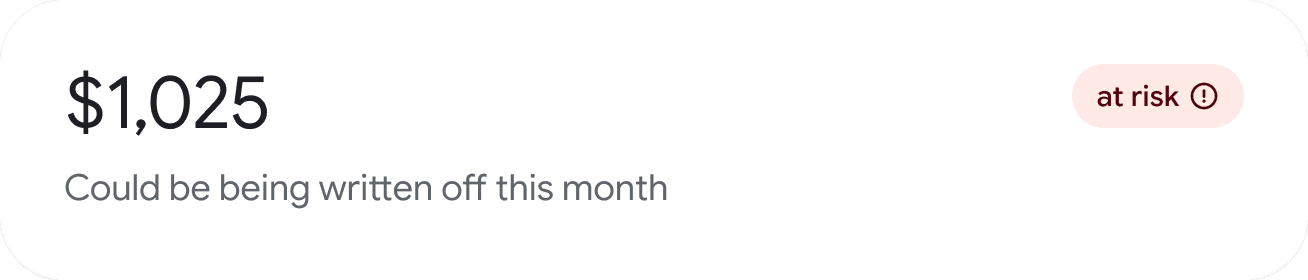
Almost every AR process works the aging report from the top: 120 days, then 90, then 60. It feels disciplined, and it is exactly backwards. The oldest bucket contains the claims most likely to be past appeal — work that cannot be recovered no matter how well it is done.
Meanwhile a large denial that landed three weeks ago, still comfortably inside its filing window, sits untouched because it is not old enough to have reached the top of the list.
Klar ranks by recoverable dollars and remaining time, not by age. A claim that is worth a lot and still appealable outranks one that is older and already lost.




What Klar does with each aging bucket
The honest version, including the bucket where the answer is that the money is gone.
| Bucket | What is usually in it | What Klar does |
|---|---|---|
| 0–30 days | Claims still adjudicating, plus the first denials and short-pays landing back. | Reads every remittance as it comes in and drafts the fixable ones, while the filing window is wide open. |
| 31–60 days | Denials that needed information, and underpayments nobody has compared against the contract yet. | Surfaces short-pays against what the payer has paid for the same service before, and prepares the appeal. |
| 61–90 days | Claims that were worked once, refused again, and quietly stopped being chased. | Flags anything approaching a timely filing deadline and pushes it up the queue regardless of dollar value. |
| 90–120 days | The bucket where appeals are still possible for some payers and already closed for others. | Splits the still-appealable from the expired using the payer's own window, so effort goes where it can still land. |
| 120+ days | Mostly past appeal. Some of it was never collectable. | Says so. A claim that cannot be recovered is marked as such rather than left on a worklist to be re-investigated every month. |
What happens in the first weeks
Klar works existing AR from day one. Nothing here requires new claims to be filed first.
The backlog gets read
Every remittance behind the aged claims is decoded, so the reason each one stalled is stated rather than guessed at.
Ranked by what is left
Recoverable dollars and remaining filing time, not age. The claims worth working rise to the top on their own.
Deadlines surfaced first
Anything close to timely filing jumps the queue, because that money disappears on a date rather than gradually.
Dead claims marked dead
Past appeal is past appeal. Klar says so instead of leaving it to be picked up and dropped again each month.
Questions about AR recovery
Still unsure? Contact usIn medical billing, recovering accounts receivable means collecting on claims already submitted to a payer that have not been paid in full — aged, denied or underpaid claims sitting on the provider's own books. The work is investigating why each one stalled, correcting or appealing it, and following it through to payment.
Accounts receivable: money owed to a business for work already delivered. In healthcare the receivable is usually owed by an insurer rather than a person, which is why medical AR recovery is mostly claim work — reading remittances and filing appeals — rather than chasing individuals for payment.
No. Klar works provider-side accounts receivable — claims owed by insurance payers to a practice. It does not contact patients about debts, does not buy receivables, and is not a collections agency. If you are receiving calls about a personal debt, that is a different kind of company entirely.
It depends on each payer's timely filing and appeal windows, which vary widely and run from the date of service or the date of the remittance depending on the payer. The practical answer is that some of a 120-day bucket is still recoverable and some is not, and the first useful thing any tool can do is tell you which is which.
Existing AR from day one. That is usually where the recoverable money is concentrated, and it is the fastest way to find out whether the platform is worth keeping.
Yes. A short-paid claim is easier to miss than a denied one because it looks like a payment. Klar compares what a payer paid against what that payer has paid for the same service before, and surfaces the gap.