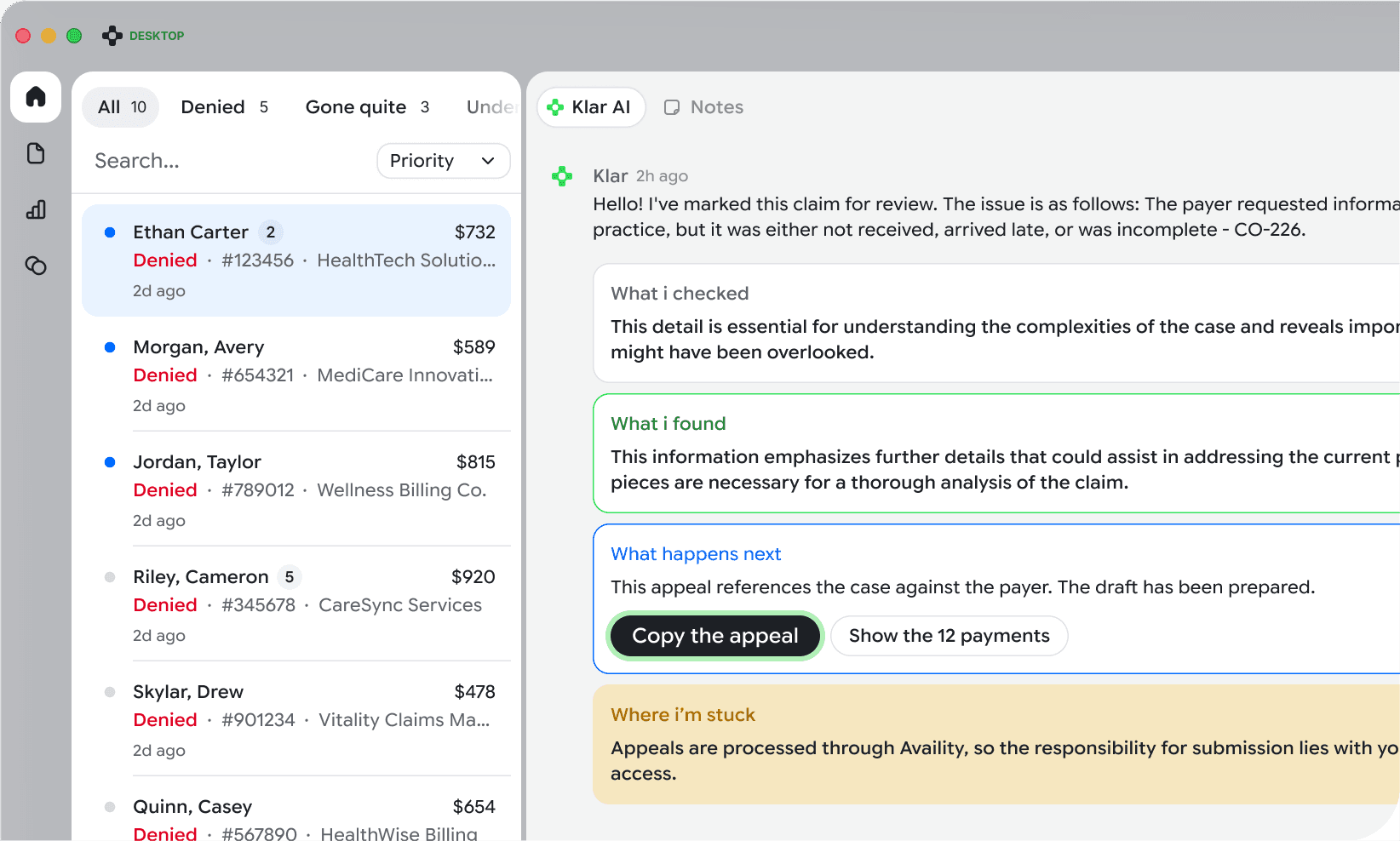
Updated Denial codes
CO-96 denial code: what it means and what to check
CO-96 means the charge is not covered by the payer. A remark code next to it usually explains why, and PR-96 means the amount was assigned to the patient.
What CO-96 means
CO-96 is a broad code for services the payer will not pay for, such as benefits the plan excludes or services it does not cover for that provider type. Payers are expected to add a remark code that gives the specific reason. With the CO group the provider is held responsible. When the same code arrives as PR-96, the payer has put the amount on the patient.
Common causes
- The plan excludes the service
- The service is not covered for that place of service or provider type
- The service falls outside the plan's rules, such as an age or frequency limit
- A coding or setup error made a covered service look like one the plan does not cover
What billers usually check
- The remark code on the remittance
- The patient's benefits for the service on the date it was provided
- Whether the patient signed a waiver or was told about the cost before the service
- Whether the payer's reason matches the plan's benefit language
General information only, not medical, legal, coding or billing advice. Klar can get things wrong, so check with the payer before you act on any claim.