You don't have a biller to spare
Medical billing for a small practice means one or two people doing claim submission, payment posting and denial follow-up alongside everything else. The denials lose. Klar takes the volume — filing, tracking, reading every remittance, drafting every appeal — and leaves your team the decisions.
- Works with your EHR
- No new clearinghouse
- Live in weeks
Small practices lose the most to denials and have the fewest people to chase them
A denial takes the same amount of work whether you file two hundred claims a month or twenty thousand. Read the remittance, work out what the payer actually wants, gather the evidence, write the appeal, track the response. That cost does not shrink with your claim volume — but your capacity to absorb it does.
So the small practice ends up with the worst version of the trade. The same per-claim work, spread across one or two people who are also answering the phone, checking eligibility and posting payments. The denials that need real effort are the ones that never get it.
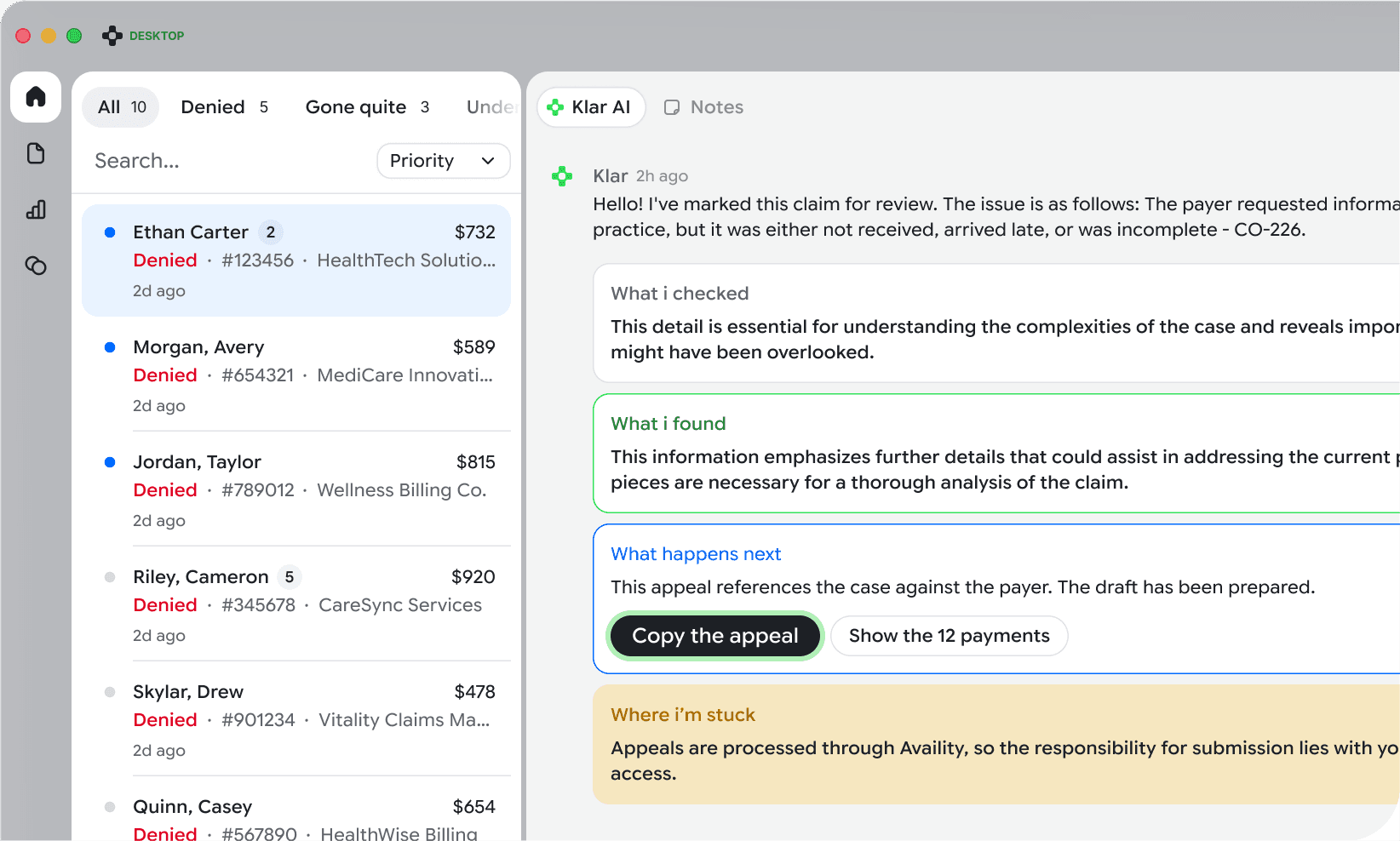
Klar does not need the work to be small. It reads every remittance as it comes in, ranks what is worth chasing, and has the appeal drafted before anyone sits down to look at it.




Hire, outsource, or run software?
The three real options, and what each one actually costs you. We have put Klar in the row it belongs in rather than at the top.
| Option | What it costs | Where it breaks down |
|---|---|---|
| Hire a biller | A salary, plus the time to recruit and train someone who knows your specialty. | One person is a single point of failure. Holidays, sickness and resignation each stop your revenue cycle, and denial work is the first thing dropped when they are busy. |
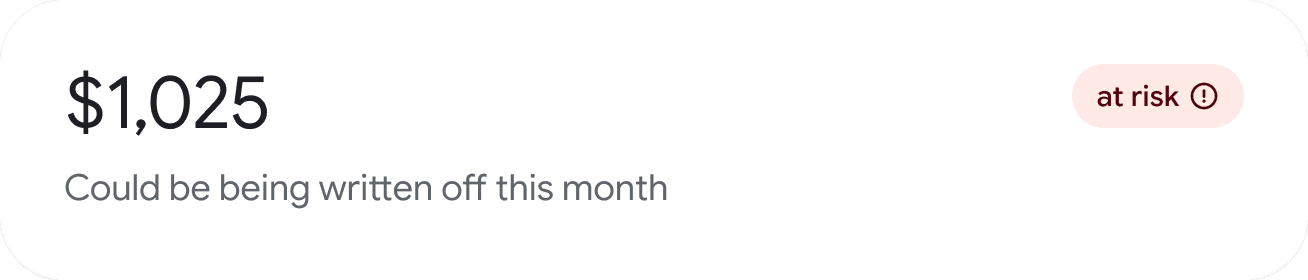
| Outsource to a billing company | Usually a percentage of everything they collect, including the money you would have collected anyway. | You lose visibility. Write-offs happen inside someone else's queue, and you find out at month end as a number rather than as a decision. |
| Run Klar | A share of the additional revenue recovered. Nothing extra collected means nothing to pay. | You still need a person to approve the work. Klar drafts and ranks, it does not sign off. If nobody in the practice can spend twenty minutes a day on approvals, none of the three options helps. |
What a small practice actually gets
Not a bigger team. The same team, with the reading and the drafting already done.
The denial already read
Every remittance decoded into plain English as it comes in, with what the payer asked for and what to do about it.
Worked biggest first
The queue is ranked by what each claim is worth, so a large denial never sits behind a small adjustment.
The appeal drafted
Corrections and appeals arrive written, with the evidence attached. Your biller reviews and approves rather than starting from a blank page.
Deadlines that do not pass quietly
Anything approaching timely filing is surfaced before the window closes, not after.
A book you can actually see
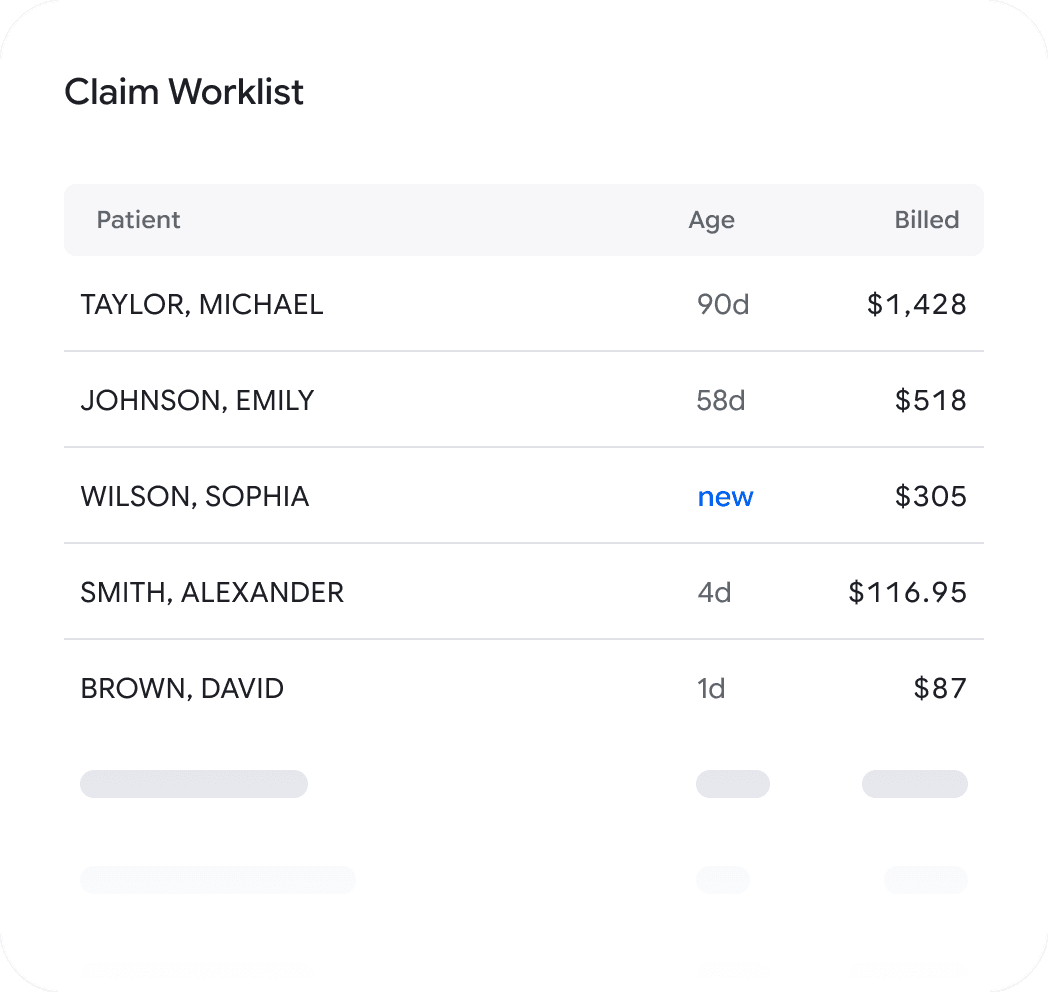
What was billed, what was collected, what is outstanding and how old it is — as it happens, not at month end.
You keep the judgment calls
Klar investigates and prepares. A person approves anything that leaves the practice. Every claim carries the payer's reason and remark codes, decoded, and what Klar checked, so approving is a read rather than a re-investigation.
For a practice of one or two billers that is the point: the twenty minutes a day goes on decisions, not on portal hunting and remittance reading.


Questions small practices ask
Still unsure? Contact usIt depends on whether your problem is submitting claims or collecting on them. If claims go out fine and the money is stuck in denials and underpayments, billing software that only files claims will not help — you need something that reads remittances and works the denials. Judge any option on what it does after the payer responds.
Document what was actually done, code it accurately, and file it inside the payer's window. Everything else in billing is recovering from a break in one of those three. It is also why denial work matters more than it looks: a denial is usually the payer telling you which of the three it thinks you got wrong.
The question is not claim volume, it is whether denials are going unworked. If your team is clearing every denial and appealing every underpayment, you do not need Klar. If denials are the thing that slips when the week gets busy, size is not what is stopping you.
No. Klar does the reading, ranking and drafting; your biller keeps the judgment calls and the payer relationships. Practices that run Klar with an experienced biller get more out of it than practices without one, because the approvals are faster and better.
Klar is priced on performance, as a share of the additional revenue the platform recovers. There is no per-seat fee and no minimum claim volume, which is deliberate — a percentage-of-collections contract charges a small practice for money it was always going to collect.
Weeks, not months. Klar connects to the EHR you already run and reads the remittance files you already receive, so there is no payer re-enrollment and no change to where your money goes.