Pediatric claims break on the routine visits
Pediatrics billing services handle claims for pediatric practices, where the volume is well-child visits, vaccines and same-day sick visits — often for patients covered by Medicaid or CHIP. Denials cluster around how a preventive and a problem visit are billed together, how vaccine administration is coded, and whose policy a newborn is actually on.
- Preventive and sick visits on the same day
- Vaccine administration coding
- Medicaid and CHIP payers
Four things that break pediatric claims
Pediatric billing is high volume and low value per claim. The same few mistakes, repeated across a full schedule, are where the money goes.
Preventive and problem visits together
When a sick concern is handled at a well-child visit, both can be billed — but the problem visit needs modifier 25 and its own documentation. Without it, one of the two is refused as bundled.
Vaccine administration
Administration codes differ depending on whether the physician counseled the family and on the child's age. 90460 and 90461 cover patients through age 18 with counseling; 90471 to 90474 cover administration without it.
Vaccines for Children
Vaccines supplied free through the Vaccines for Children program are not billed as a purchased product. How the vaccine line is reported varies by state Medicaid program, and getting it wrong can refuse the administration too.
Newborns and coverage
A newborn's claims often go out before the baby is added to a policy, or under the wrong subscriber. Those come back as eligibility denials and need resubmitting once coverage is confirmed.
The codes pediatric practices bill most
The routine set. Verify current descriptors against the CPT code set, your state Medicaid program and each plan's policy before billing.
| Code | What it covers | Where it goes wrong |
|---|---|---|
| 99381–99385 / 99391–99395 | Preventive visits for new and established patients, in age bands. | The code has to match the child's age band, and payers limit preventive visits to their periodicity schedule — an extra visit inside the window is refused. |
| 99212–99215 with modifier 25 | A problem-oriented visit on the same day as a preventive one. | Refused as bundled when modifier 25 is missing or the note does not show a separately identifiable problem. |
| 90460 / 90461 | Vaccine administration with counseling, through age 18 — first component and each additional component. | Components are counted per vaccine component, not per shot. Miscounting under-bills combination vaccines. |
| 90471–90474 | Vaccine administration without counseling. | Used when the counseling requirements for 90460 are not met, or for patients over 18. |
| 96110 / 96127 | Developmental screening, and brief emotional or behavioral assessment. | Billed per instrument, and payers differ on how many they cover per visit. |
A full schedule of small denials
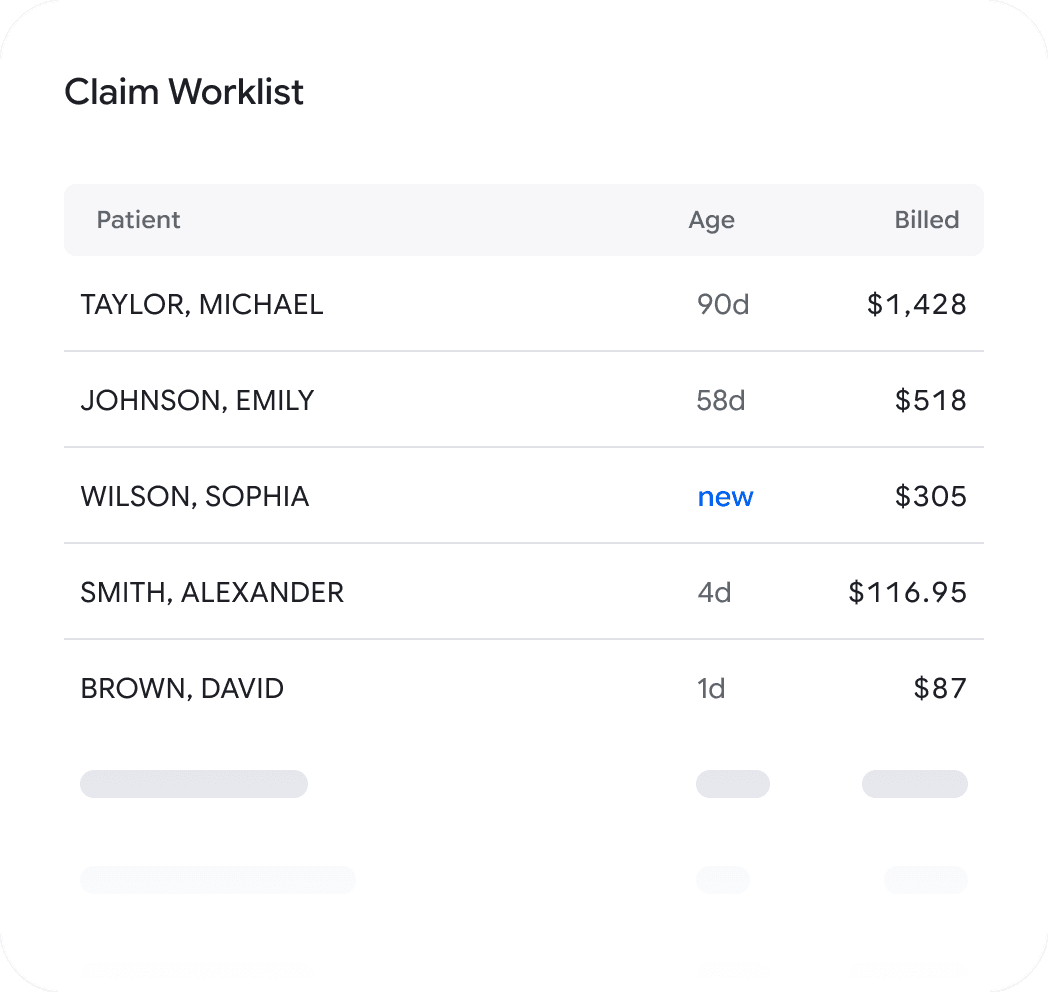
A refused vaccine administration line or a bundled sick visit is worth very little on its own. Across a pediatric practice's schedule, the same refusal can repeat on dozens of claims a week, and nobody has time to work each one.
Worked as a pattern — same payer, same reason — they become one fix applied to every claim it affects.
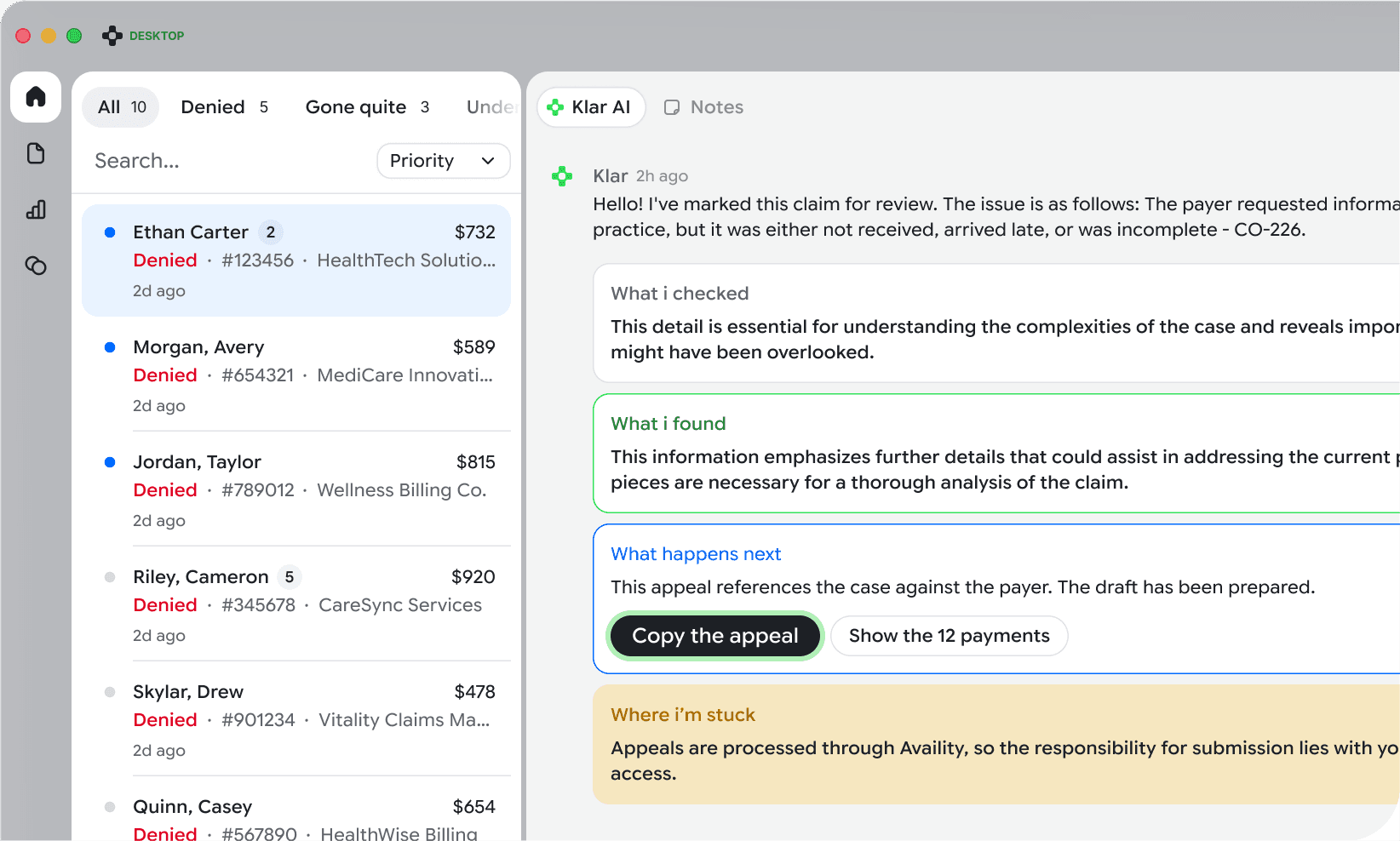
Klar groups denials that share a payer and a cause, drafts the correction once, and leaves a person to approve it across the whole group.


Two questions pediatric practices ask
Most of our patients are on Medicaid. Does that matter?
It shapes everything. Medicaid and CHIP rules are set state by state, managed-care plans add their own on top, and eligibility changes more often than with commercial coverage.
Klar reads each payer's remittance on its own terms, so a Medicaid refusal is decoded against what that payer actually said rather than a generic rule.
Can you help with vaccine claims specifically?
Yes. A refused administration line on an otherwise paid claim is easy to miss, because the claim still shows a payment. Klar reads every line of the remittance, so it is surfaced as its own item.
How your state wants Vaccines for Children doses reported is a rule to confirm with your state program — Klar will show you where a payer disagreed with how you reported it.
Questions pediatric practices ask
Still unsure? Contact usMost third-party billing services charge a percentage of what they collect. Klar charges a share of the additional revenue it recovers instead, which suits pediatrics, where claims are small and the losses are spread across many refused lines rather than a few large denials.
Yes, when a separate problem is addressed and documented. Bill the preventive visit and the problem-oriented E/M, with modifier 25 on the E/M. Without the modifier, or without a clearly separate problem in the note, payers refuse one of the two as bundled.
90460 is vaccine administration with counseling by a physician or qualified health professional, for patients through age 18, and it is paired with 90461 for each additional vaccine component. 90471 to 90474 are administration without that counseling. Using the wrong family is a common cause of refused or under-paid vaccine lines.
Usually because the claim went out before the baby was added to a policy, or under the wrong subscriber. They come back as eligibility refusals and need resubmitting once coverage is in place — within the payer's filing window, which is why they are worth tracking rather than leaving.
No. Klar works alongside the EHR you already run and reads the remittance files your practice already receives.